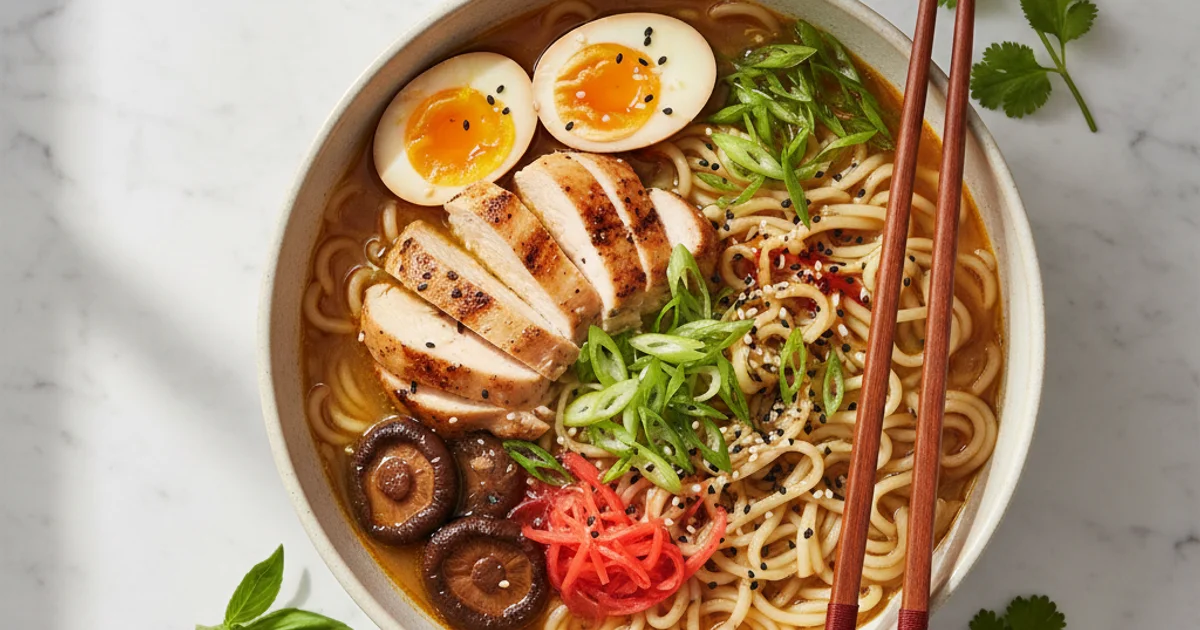
GF Ramen: Slurp-Worthy Bowls, No Gluten!
Discover how to make incredible ramen gluten free noodles at home! This recipe answers 'does ramen have gluten?' and offers solutions for gluten-free instant ramen lovers.
- 1Embracing Gluten-Free: Why This Ramen Journey Matters
- 2Why You’ll Fall in Love with This Gluten-Free Ramen Recipe
- 3Essential Ingredients for Your Gluten Free Ramen Noodles Bowl
- 4Equipment You’ll Need for Perfect Gluten-Free Instant Noodles (and homemade!)
- 5Step-by-Step: Crafting Your Gluten-Free Ramen Recipe
- 6Pro Tips & Tricks for the Best Gluten Free Instant Ramen Experience
Ingredients
For the Broth
- 6 cups gluten-free chicken or vegetable broth
- 2 tablespoons tamari (gluten-free soy sauce)
- 1 tablespoon fresh ginger, grated
- 2 cloves garlic, minced
- 1 tablespoon white miso paste (gluten-free)
- 1 teaspoon sesame oil
- Pinch of red pepper flakes (optional)
For the Noodles & Toppings
- 8 oz gluten-free ramen noodles (rice, millet, or sweet potato starch based)
- 4 large eggs, soft-boiled
- 8 oz firm tofu, pressed and sliced, or cooked chicken/pork
- 4 oz baby bok choy, chopped
- 4 oz shiitake mushrooms, sliced
- 2 green onions, thinly sliced (for garnish)
- 1 tablespoon toasted sesame seeds (for garnish)
- Nori sheets, cut into strips (for garnish)
- Chili oil (optional, for serving)
Instructions
Instructions
Prepare your ingredients: chop vegetables, mince ginger and garlic, slice tofu/protein.
Instructions
In a large pot, heat sesame oil over medium heat. Add ginger and garlic; sauté until fragrant (1-2 minutes).
Instructions
Pour in gluten-free broth, tamari, and red pepper flakes (if using). Bring to a gentle simmer.
Instructions
In a small bowl, whisk miso paste with a spoonful of hot broth until smooth. Stir the miso mixture back into the main broth. Keep warm on low heat.
Instructions
Cook gluten-free ramen noodles according to package directions. Drain well and set aside.
Instructions
While noodles cook, prepare toppings: soft-boil eggs, sear tofu/protein, quickly blanch bok choy and sauté mushrooms.
Instructions
Assemble bowls: Divide cooked noodles among 4 large bowls. Ladle hot broth over the noodles.
Instructions
Arrange toppings artfully over the noodles and broth: eggs, tofu/protein, bok choy, and mushrooms.
Instructions
Garnish with sliced green onions, toasted sesame seeds, nori strips, and a drizzle of chili oil if desired. Serve immediately.
Recipe FAQs
Does ramen have gluten in traditional preparations?
Are there any good brands of gluten-free instant ramen or noodles?
Can I make this ramen recipe vegetarian or vegan?
What's the best way to prevent gluten-free noodles from becoming mushy?
Is Tamari truly gluten-free, or is it just low-gluten?
How can I add more protein to my gluten-free ramen bowl?
GF Ramen: Slurp-Worthy Bowls, No Gluten!
Discover how to make incredible ramen gluten free noodles at home! This recipe answers 'does ramen have gluten?' and offers solutions for gluten-free instant ramen lovers.
Prep Time
15 min
Cook Time
25 min
Total Time
40 min
For the Broth
- 6 cups gluten-free chicken or vegetable broth
- 2 tablespoons tamari (gluten-free soy sauce)
- 1 tablespoon fresh ginger, grated
- 2 cloves garlic, minced
- 1 tablespoon white miso paste (gluten-free)
- 1 teaspoon sesame oil
- Pinch of red pepper flakes (optional)
For the Noodles & Toppings
- 8 oz gluten-free ramen noodles (rice, millet, or sweet potato starch based)
- 4 large eggs, soft-boiled
- 8 oz firm tofu, pressed and sliced, or cooked chicken/pork
- 4 oz baby bok choy, chopped
- 4 oz shiitake mushrooms, sliced
- 2 green onions, thinly sliced (for garnish)
- 1 tablespoon toasted sesame seeds (for garnish)
- Nori sheets, cut into strips (for garnish)
- Chili oil (optional, for serving)
Embracing Gluten-Free: Why This Ramen Journey Matters
For many, the comforting warmth of a steaming bowl of ramen is a cherished memory. Yet, for those navigating gluten sensitivities or celiac disease, this beloved dish often remains off-limits. Traditional ramen noodles are almost universally made from wheat flour, a common allergen that can cause significant discomfort. This reality forces many to forgo one of the world’s most satisfying culinary experiences.
What I discovered is that enjoying ramen doesn’t have to mean sacrificing your dietary needs. The market is slowly catching up, but often the commercially available gluten free instant noodles or gluten free instant ramen options lack the authentic chew and rich flavor profile we crave. This recipe aims to bridge that gap, providing a homemade alternative that truly satisfies. It’s a common misconception that embracing a gluten-free diet means compromising on taste or texture, especially with complex dishes like ramen. This approach proves otherwise.
In my kitchen, I’ve spent countless hours perfecting a method that delivers on both fronts. We’re not just creating a substitute; we’re crafting a genuinely enjoyable meal. This particular ramen gluten free noodles recipe allows everyone to partake in that deeply savory, umami-rich experience without any unwelcome after-effects. It’s about reclaiming a culinary joy that many thought was lost. The journey to a truly satisfying gluten free ramen recipe has been a personal one, driven by a desire to share that comfort with others. This isn’t just food; it’s an invitation to a delicious, worry-free indulgence.
Why You’ll Fall in Love with This Gluten-Free Ramen Recipe
I always gravitate towards recipes that deliver on taste without compromising dietary needs. This particular gluten-free ramen recipe hits all the right notes, bringing that familiar comfort straight to your bowl. What I love about this is how it shatters the myth that a truly satisfying ramen experience is off-limits for those avoiding gluten. You’ll notice that every slurp offers a depth of flavor reminiscent of your favorite ramen shop, but without the worry about does ramen have gluten.
Here’s the thing, many assume that creating a truly authentic-tasting ramen at home, especially a gluten free ramen recipe, is a monumental task. This recipe proves otherwise, simplifying the process while retaining all the essential umami notes. It’s incredibly versatile; I often swap out vegetables based on what’s fresh in my fridge, making it a sustainable and adaptable meal. This flexibility means you can enjoy a different version every time, always tailored to your personal cravings.
Building on this, the speed at which this dish comes together is a major plus. Forget those long simmering broths for a moment; this approach provides a rich base in significantly less time. It’s ideal for those busy weeknights when you still crave something nourishing and deeply flavorful. Trust me on this one; you won’t be sacrificing taste for convenience here.
A common mistake is believing that all gluten free instant noodles lack the chew and texture of traditional wheat varieties. This recipe guides you to selecting the best options, ensuring a delightful mouthfeel with every bite. The secret is in pairing the right noodles with a robust broth, creating a harmonious and utterly comforting meal. This homemade version also allows for complete control over ingredients, letting you manage sodium and fat levels, making it a healthier choice than many store-bought or restaurant options. It elegantly answers the question, is ramen noodles gluten free, with a resounding and delicious yes.
Essential Ingredients for Your Gluten Free Ramen Noodles Bowl
What I discovered through years of testing is that the foundation of any truly satisfying ramen lies in its ingredients. When it comes to crafting the perfect bowl that addresses the common question, “does ramen have gluten?”, selecting the right components is paramount. You can build incredible depth of flavor with careful choices.
Let’s start with the star: the ramen gluten free noodles themselves. Forget traditional wheat-based varieties; we have fantastic alternatives. I always lean towards rice noodles for their delicate texture and quick cooking time, especially the thinner vermicelli types. Another excellent option is buckwheat soba noodles, but be sure to check the label; some brands blend buckwheat with wheat flour. For a chewier bite, sweet potato starch noodles (often labeled as glass noodles) are a revelation. Millet or brown rice ramen are also great choices for those seeking a heartier noodle. When selecting, look for certified gluten-free labels to ensure no cross-contamination.
Building on this, the broth base is non-negotiable for flavor. For a rich, savory experience, I often make my own chicken or vegetable broth from scratch, guaranteeing it’s entirely free from gluten-containing additives. If using store-bought, scrutinize ingredient lists for hidden gluten in flavorings or thickeners. Brands like Pacific Foods or Imagine Foods offer reliable gluten-free broths. For a deeper umami, a mushroom broth base works wonders, especially if you’re aiming for a vegetarian or vegan version of this dish.
Here’s the thing about aromatics: they are the soul of the broth. Fresh ginger and garlic, finely minced or sliced, are essential for that warm, pungent base. Sautéing them gently before adding liquid unlocks their full potential. Green onions, sliced thinly, serve a dual purpose – they infuse the broth with a mild oniony note during cooking and provide a fresh, crisp garnish later.
For that signature savory depth, umami boosters are critical. Tamari is your go-to gluten-free alternative to soy sauce; its flavor is virtually identical. Miso paste, another umami powerhouse, comes in various forms (white, yellow, red). Always opt for a certified gluten-free miso, as some traditional varieties can contain barley. A drizzle of toasted sesame oil at the end adds a nutty, aromatic finish that ties everything together.
Adding protein elevates this dish from a simple noodle soup to a complete meal. For plant-based options, extra-firm tofu, pressed and pan-fried until golden, absorbs flavors beautifully. Soft-boiled or jammy eggs are a classic ramen topping, offering a creamy yolk and satisfying texture. If using chicken or pork, marinating slices in a bit of tamari, ginger, and sesame oil before cooking ensures they are flavorful and tender. This also prevents you from needing to ask “do ramen noodles contain gluten” when considering your other ingredients.
Finally, don’t forget the vibrant addition of vegetables. Bok choy wilts beautifully in the hot broth, offering a slight bitterness and crunch. Fresh spinach adds a pop of color and nutrients, while sliced mushrooms (shiitake, oyster, or cremini) contribute earthy notes and a meaty texture. Thinly sliced carrots or bell peppers can add sweetness and extra crunch. These fresh components truly brighten the overall bowl.
To complete your gluten-free ramen experience, garnishes are a must. A swirl of chili oil provides a customizable kick of heat. Crumbled nori (seaweed sheets) adds a delicate oceanic flavor and a subtle crispness. Toasted sesame seeds offer a nutty crunch and visual appeal. These final touches transform a good bowl into an exceptional one.
Equipment You’ll Need for Perfect Gluten-Free Instant Noodles (and homemade!)
In my kitchen, having the right tools makes all the difference for a smooth cooking experience. You don’t need a professional setup, but a few key items will elevate your homemade ramen, whether you’re using gluten free instant noodles or crafting a broth from scratch. First off, a large pot is non-negotiable. This isn’t just for boiling water; it’s where your rich broth comes to life and where your noodles get their perfect chew. You’ll want one big enough to comfortably hold your broth ingredients and then later, your gluten free ramen recipe components without crowding.
Next, a small saucepan is incredibly useful, especially if you love a jammy egg on top of your bowl. I always use a separate pan for my eggs to ensure precise cooking times without interfering with the main broth. For all your chopping needs, a sturdy cutting board and a sharp knife are essential. From thinly slicing scallions to dicing mushrooms, good prep tools make quick work of your ingredients. Accurate measurements are crucial for balanced flavors, so keep your measuring cups and spoons handy. This ensures your seasonings are spot-on every time, preventing an overly salty or bland broth.
A whisk might seem minor, but it’s invaluable for incorporating miso paste into your broth smoothly, preventing any clumping. This creates that silky, uniform texture we all crave in a good ramen. Finally, don’t forget your serving bowls! Large, deep bowls are ideal for holding all the delicious layers of this dish. A ladle makes serving the hot broth easy and mess-free. For those aiming for ultimate clarity in their homemade broths, a fine-mesh sieve can be a game-changer, removing any small particles for a pristine finish. Building on this, these tools ensure that every component of your gluten-free ramen experience is as enjoyable as possible.
Step-by-Step: Crafting Your Gluten-Free Ramen Recipe
-
Prep Ingredients: Begin by preparing all your ingredients. Chop your chosen vegetables (such as carrots, bok choy, or mushrooms) into bite-sized pieces, mince your aromatics (like garlic and ginger), and prepare your protein (slice chicken breast, tofu, or beef thinly, or shred cooked pork).
-
Build the Broth Base: In a large pot or Dutch oven, sauté your minced aromatics in a tablespoon of sesame oil over medium heat until fragrant, about 1-2 minutes. Add your chosen broth (vegetable, chicken, or beef), tamari (a gluten-free soy sauce alternative), and any other desired seasonings like rice vinegar, sriracha, or miso paste. Bring the mixture to a gentle simmer and let it cook for at least 10-15 minutes to allow the flavors to fully develop.
-
Cook the Noodles: While the broth simmers, prepare your gluten-free ramen noodles according to the specific package directions. It is crucial to follow these instructions carefully, paying close attention to the recommended cooking time, as gluten-free noodles can easily become overcooked and mushy if left in the water for too long.
-
Prepare Toppings: While your broth simmers, get your toppings ready; for protein, sear slices of firm tofu until golden brown, or boil eggs for 6-7 minutes for a jammy yolk, then blanch your chosen vegetables like spinach or bok choy in the hot broth for just 30 seconds until vibrant.
-
Assemble Your Bowl: Carefully place the drained gluten-free ramen noodles into a large, deep serving bowl, then ladle the steaming hot broth generously over the noodles, ensuring they are fully submerged, and artfully arrange your prepared protein and blanched vegetables on top.
-
Garnish & Serve: Add the final touches to your ramen by sprinkling fresh chopped green onions and a pinch of toasted sesame seeds over the top, and for a delightful kick, drizzle a few drops of chili oil before serving immediately.
Pro Tips & Tricks for the Best Gluten Free Instant Ramen Experience
Here’s the thing, mastering this dish goes beyond just following a recipe. It involves understanding the nuances of gluten-free ingredients and applying specific techniques. I always tell people that a little extra effort in key areas makes a huge difference.
One crucial aspect is noodle preparation. Gluten-free instant ramen noodles often behave differently than their wheat-based counterparts. They can turn mushy very quickly if overcooked. Trust me on this one; watch them like a hawk. The trick is to cook them just until al dente, usually a minute or two less than the package instructions suggest. You’ll notice that they continue to cook slightly in the hot broth. This prevents that unpleasant gummy texture.
Worth noting here, building deep flavor in your broth is paramount. Don’t rush the process, especially if you’re starting with a homemade base. Layering flavors from the very beginning, with aromatics like garlic and ginger, creates a complex foundation. If you’re using a store-bought broth, even a good quality one, consider simmering it with a piece of kombu or a few dried shiitake mushrooms for an extra umami boost. This simple step elevates the entire bowl.
When incorporating miso paste, a common mistake is adding it directly to a boiling pot. This can cause it to clump and diminish its delicate flavor. The secret is to temper the miso first. Ladle a small amount of warm broth into a separate bowl, then whisk the miso paste into it until completely smooth. Only then should you stir this mixture back into the main pot. This ensures even distribution and preserves the miso’s unique qualities.
Perfect soft-boiled eggs are a non-negotiable for me. They add richness and a beautiful texture contrast. For that jammy, custardy yolk, I always bring a pot of water to a rolling boil. Carefully lower cold eggs into the boiling water and cook for exactly 6 minutes and 30 seconds. Immediately transfer them to an ice bath to stop the cooking. This precise timing gives you that ideal runny-but-set yolk every single time.
In practice, even when using gluten free instant noodles, you can significantly upgrade the broth. Beyond the kombu and shiitake, a dash of toasted sesame oil, a splash of rice vinegar, or a pinch of white pepper can transform a basic broth into something special. These small additions add depth and brightness that make it feel less “instant” and more gourmet. For a really deep dive into broth building, I often refer to resources like this comprehensive guide to ramen broth.
Customizing spice levels is another area where you can truly make this recipe your own. I love a good kick, but not everyone does. Start with a small amount of chili oil or sriracha and add more to taste. For a deeper, smoky heat, a pinch of gochugaru (Korean chili flakes) can be fantastic. Remember, you can always add more spice, but you can’t take it away. So, proceed with caution and taste as you go.
Finally, ensuring your toppings are also gluten-free is essential. While the noodles might be the obvious concern, checking labels on soy sauce, for instance, is vital. Always opt for Tamari, which is a naturally gluten-free alternative to traditional soy sauce. Coconut aminos also work wonderfully for a soy-free option. Both provide that essential umami and salty balance without compromising your dietary needs.
Enjoyed this recipe? Share it with a friend or save it to your board for later. Leave a comment below — I love hearing how it turned out!
You May Also Enjoy





You Might Also Love These 🍽️
Recipes picked just for you based on what you’re cooking